 Global Politics
Unit 4 - Peace and Conflict
April 4
Course Companion Case studies:
P 84 - US involvement in Israel
The US was the first country to recognize Israel in 1948. In 1999 congress voted to move the US embassy to Jerusalem (disputed territory), but it did not pass. In 2020, Trump did move it and tried making peace talks between Palestine and Israel that didn't pan out
“This makes it clear that third parties cannot always be trusted to intervene selflessly and constructively in a conflict.”
p 89 - 2019 El Angel graffiti protest
Mexico protestors graffitied a national monument to protest gender based violence and sexual assault, yet condemned for being violent and vandals.
This sparked statements of hypocrisy since they cared more about a static monument over modern issues
p 92 - Conflict Map of Myanmar
The Tatmadaw largely separated themselves from the rest of the country after controlling it after a coup d'etat
minorities found to be in genocide by many orgs. A lot of this has to do with them not being recognized as citizens by the government, causing reduced land rights, with many fleeing to Bandgledesh
p 93 - Characteristics of war: conventional, guerrilla and terrorism
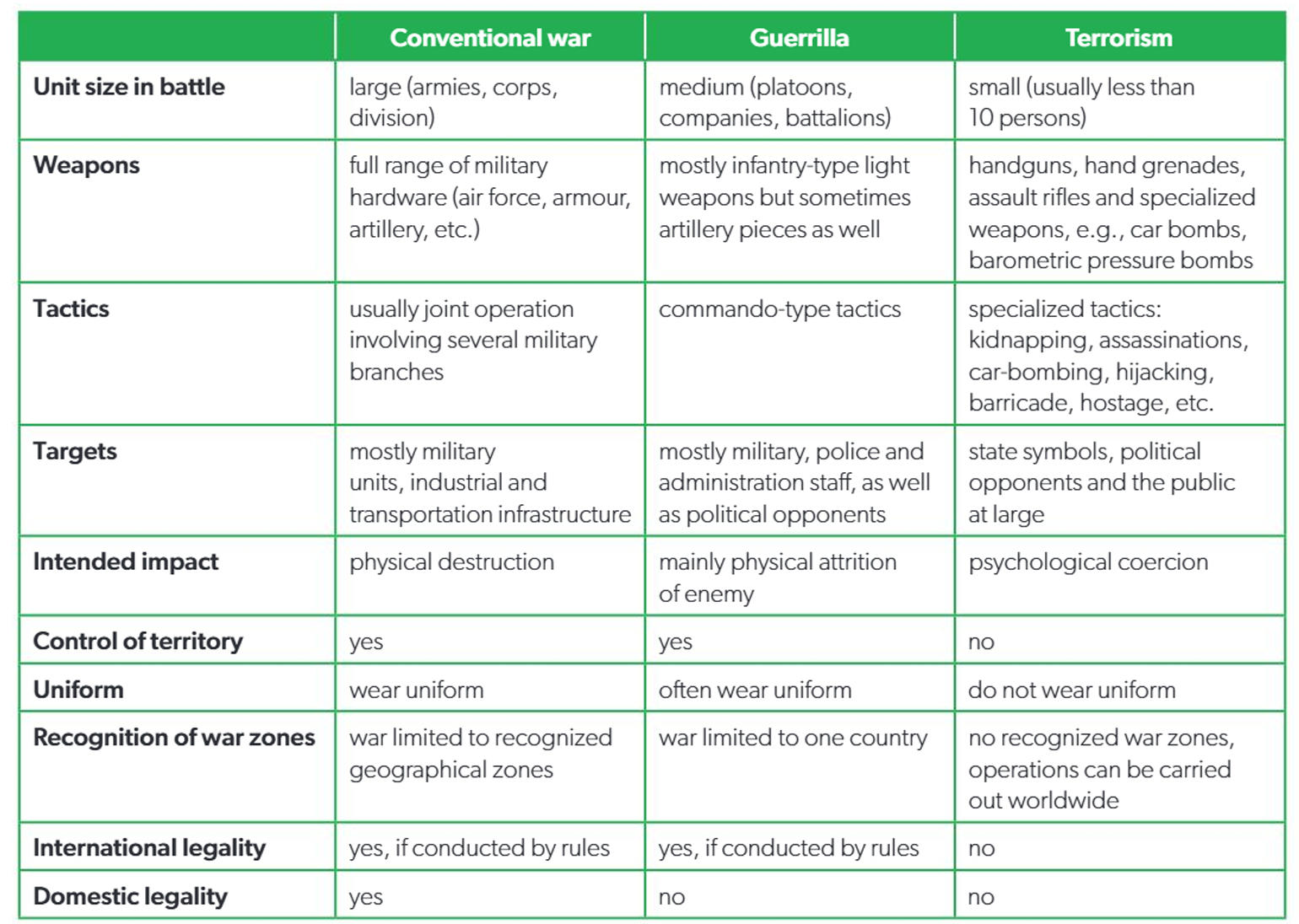
Concept - p 97: Realism and sovereignty (RTP)
military justification is justified by the UN only if “international peace and security" are under threat. Responsibility to Protect (R2P). The belief that states forego the right to full sovereignty if they “fail to protect their populations from genocide, war crimes, ethnic cleansing and crimes against humanity”.
p 100 - Ten Stages of Genocide
Classification - make an us vs them
Symbolization - gives names to the classification (can be physical)
Discrimination - laws and customs
Dehumanization - Perpetrators call victims a disease, rats, etc.
^ 1-4 Process called “othering”
Organization - hate groups, armies, militias organize
Polarization - moderates are targeting, particular those in the perpetrator's group
Preparation - plans for killing and deportation made by leaders. Perps are trained and armed
Persecution - victims are identified, arrested, transported, concentrated into prisons / ghettos / concentration camps
Extermination - where genocide occurs. Intentional destruction of either whole or in part of national ethnic racial or religious group
Exam-Style Questions: Development & Sustainability - p. 267-270 (Big Book)
Johan Galtung's theory on violence and conflict - p 275-284 (Big Book)
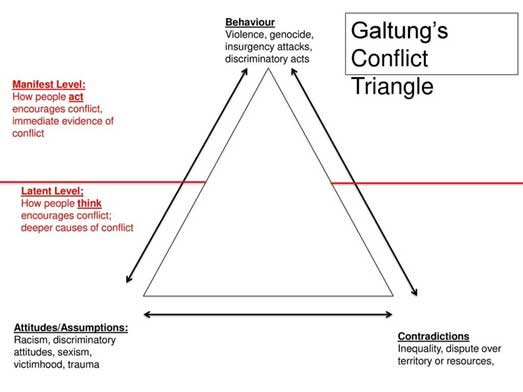
Galtung's Conflict Triangle